
A stone media wall is not merely a decorative surface; it is the geological anchor of a modern home. You likely recognise that a feature of this magnitude demands more than just placement. It requires a curated dialogue between raw Earth and refined living. Masterfully executed, it becomes a testament to architectural intentionality. However, the path to perfection is often obscured by clashing textures or the unsightly clutter of exposed cables. Learning how to style a stone media wall is the essential process of reconciling these elements to create a space that feels both modern and timeless.
You deserve a living area where high-end technology and natural beauty exist in total harmony. We will show you how to balance raw geological textures with refined styling techniques for a truly bespoke result. This guide explores the sophisticated integration of light and shadow to enhance the depth of materials like Cobalt Slate or Volcanic Ash, ensuring your design choices are validated by professional-grade craftsmanship. It's time to transform your vision into a permanent standard of excellence.
Key Takeaways
- Understand the architectural shift from traditional cabinetry to floor-to-ceiling stone features that serve as a permanent geological anchor in open-plan living areas.
- Discover how to style a stone media wall by masterfully manipulating light and shadow to accentuate the unique textures of materials like Lumia Stone and Cobalt Slate.
- Implement the "Invisible Tech" philosophy to seamlessly integrate high-end screens and sound systems without disrupting the clean, organic lines of the stone.
- Create a balanced sensory experience by pairing raw stone surfaces with soft furnishings and bespoke handcrafted furniture to reconcile hard edges with comfort.
- Learn the benefits of a bespoke approach, utilising rare materials such as Fluted Bondi Sand to ensure your installation is a unique work of architectural art.
Defining the Aesthetic: The Evolution of the Luxury Media Wall
The evolution of the home's focal point has reached a stage of geological permanence. We've transitioned from the era of modular cabinetry and temporary furniture towards expansive, floor-to-ceiling stone features that redefine the room's skeleton. In modern, open-plan living spaces, natural stone serves as the ultimate anchor. It provides a visual and physical weight that grounds the airy nature of the architecture. This shift represents the pinnacle of "Quiet Luxury." It doesn't rely on ornate patterns or flashy finishes. Instead, it draws its power from the inherent quality of the material and the quiet confidence of its presence.
There is a profound psychological comfort in bringing raw, geological elements into the home. It's a deep-seated connection to the natural world that softens the clinical edges of our digital lives. By understanding the history of stonemasonry, we recognise that stone has always been a symbol of shelter, status, and endurance. When you consider how to style a stone media wall, you're not just choosing a finish. You're curating an atmosphere of safety and enduring sophistication that resonates on a primal level.
The Media Wall as an Architectural Sanctuary
Stone creates a sense of permanence that pixels cannot replicate. Whilst technology evolves at a staggering pace, a stone facade remains a constant. It's the perfect foil for the coldness of high-end screens and soundbars. The tactile warmth of textured stone, such as Volcanic Ash, balances the clinical perfection of glass and metal. Designing with stone is a commitment to longevity. It won't peel like wallpaper or scuff like paint. It matures with the property, becoming more integral to the home's identity every year.
Establishing Your Design Language
Your choice of stone dictates the room's dialect. A minimalist monolith of Lumia Stone offers a different narrative than the deep, moody layers of Cobalt Slate. Mastering how to style a stone media wall requires a keen eye for proportion. Scale is the most critical factor. The wall must possess the gravitas to lead the room without overbearing the natural light. You must decide which element takes the lead. Whether the stone is the hero or the fireplace is the protagonist, every detail must be intentional. This clarity separates a standard installation from a bespoke architectural feature that commands attention through its curated simplicity.
The Interplay of Texture and Light: Styling with Premium Stone
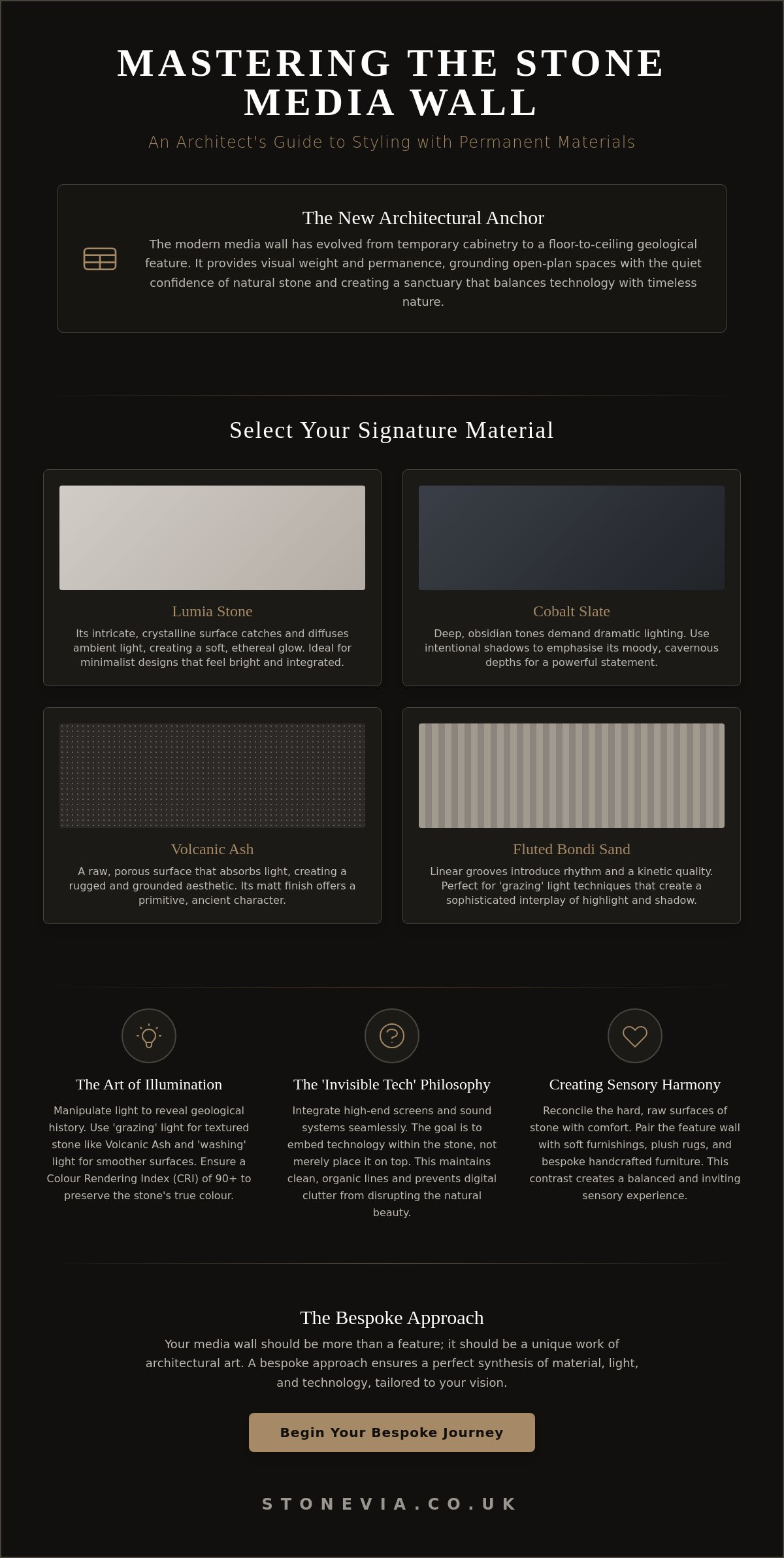
Light is the architect’s invisible tool. When planning how to style a stone media wall, one must view light not as mere illumination, but as a medium to reveal geological history. Lumia Stone, with its intricate, crystalline surface, acts as a canvas for ambient light. It catches and diffuses brightness to create a soft, ethereal glow that feels integrated into the room’s atmosphere. In contrast, the deep, obsidian tones of Cobalt Slate demand a more dramatic approach. By positioning light sources to cast intentional shadows, you emphasize the moody, cavernous depths of the slate. This turns a flat surface into a three-dimensional landscape that shifts as the sun moves across the sky.
To complement natural light with high-quality interior fixtures that accentuate these textures, you can read more about curated lighting collections designed for premium architectural spaces.
Volcanic Ash presents a different tactile challenge. Its raw, porous surface absorbs light, creating a rugged and grounded aesthetic that feels ancient. To master how to style a stone media wall using such a primitive material, you should embrace its matt finish and avoid harsh, direct spotlights that might wash out its character. Fluted Bondi Sand, however, introduces a sense of rhythm. The linear grooves create a kinetic experience. Using directional "grazing" light, where the source is placed parallel to the surface, highlights the peaks and valleys of the fluting. This creates a rhythmic interplay of highlight and shadow that adds a sophisticated pulse to the living space.
Lighting Techniques for High-End Cladding
Grazing light is essential for textured stone like Volcanic Ash to reveal its unique topography. Washing light is better suited for flatter, more uniform surfaces where the goal is to minimise shadows and create a clean, minimalist backdrop. The Colour Rendering Index (CRI) of your bulbs is vital. Use LEDs with a CRI of 90 or higher to ensure the natural ochres and greys of the stone aren't distorted by a synthetic tint. Integrating hidden LED channels within fluted panels provides a seamless, architectural glow that feels built-in rather than added on. If you're seeking to specify a particular finish, browsing a bespoke stone range can help you visualise how these textures respond to professional lighting.
Materiality and Sensory Contrast
Luxury design thrives on tension. The clinical, high-gloss surface of an OLED screen provides a sharp juxtaposition against the ruggedness of textured volcanic ash. This contrast heightens the perceived quality of both materials. Fluted surfaces offer a sense of movement; they appear to shift as your perspective changes. The "touchability" of the wall is also a factor. A media wall that invites a tactile response establishes a deeper connection between the inhabitant and the architecture. It's about more than just sight; it's about the weight and presence of the material within your personal sanctuary. When we incorporate Natural Stone in Interior Design, we're not just decorating; we're building a sensory experience that stands the test of time.
Balancing Technology and Natural Elements
Technology is a necessity, but it shouldn't be the protagonist. The "Invisible Tech" philosophy treats hardware as a secondary layer to the stone's primary narrative. When considering how to style a stone media wall, the goal is the total concealment of the utilitarian. Wires, ports, and brackets must vanish. This creates a seamless integration where the screen appears to emerge from the rock face itself, rather than being an afterthought attached to it. It's a dialogue between high-precision engineering and raw, geological weight.
The choice of display is equally critical. A standard black rectangle can disrupt the organic flow of a feature wall. High-end "Art Mode" televisions resolve this conflict. They transform the screen into a curated digital canvas when not in use, allowing the media wall to maintain its architectural integrity throughout the day. Acoustic performance also requires foresight. Stone is a highly reflective surface. Sound waves will bounce. To maintain audio clarity, one must organise the surrounding space with soft textures or strategically placed acoustic treatments that don't compromise the aesthetic. Balance is the objective.
Seamless Hardware Integration
Bespoke recessing is the hallmark of professional design. By creating a precision-cut niche, the screen sits flush with the stone surface, eliminating unsightly side profiles and shadows. Heat management is a vital consideration when electronics coexist with fireplaces. Adequate ventilation channels must be engineered behind the stone facade to protect sensitive components from thermal stress. For audio, hidden soundbars can be shrouded in bespoke acoustic fabrics that mimic the grey tones of Volcanic Ash or the deep hues of Cobalt Slate, ensuring the hardware is heard but never seen.
The Fireplace as a Focal Point
A linear electric fire provides a modern, horizontal contrast to the vertical weight of heavy stone cladding. The interaction is mesmerising. The flicker of a flame dances against the crystalline structures found in Lumia Stone, creating a dynamic light show that shifts with every ember. Using stone plinths adds another layer of sophistication. These elevated platforms create multi-level visual interest and provide a dedicated stage for the hearth. This architectural layering ensures the fire feels anchored within the wall, rather than merely floating against it. Mastering how to style a stone media wall involves this delicate balance between the heat of the flame and the permanence of the stone.
Curating the Surrounding Space: Furniture and Accents
The architectural impact of a stone feature wall is magnified by the objects it shares space with. A media wall serves as the anchor, but the surrounding environment provides the context. To maintain a sense of geological continuity, consider selecting bespoke handcrafted furniture that echoes the wall’s material palette. A coffee table carved from the same Cobalt Slate or Volcanic Ash used in the cladding creates a powerful visual link. This dialogue between the vertical and horizontal planes ensures the room feels like a single, intentional composition rather than a collection of disparate pieces.
Contrast is essential to prevent a space from feeling clinical. Whilst the stone provides a rugged, permanent foundation, soft furnishings introduce necessary warmth. Velvet or heavy-knit wool throws in muted, earthy tones can soften the hard edges of the stone. This tactile variety is a hallmark of luxury design. When deciding how to style a stone media wall, focus on "Tonal Layering." By using variations of a single colour, such as charcoal, slate, and flint, you create depth without the distraction of clashing hues. This approach allows the natural variations in the stone’s topography to remain the primary focus.
Material Synergy: From Wall to Floor
In open-plan living areas, the stone’s influence should extend into the dining or kitchen zones. Coordinating a bespoke stone dining table with the feature wall creates a unified architectural language. Follow the "Rule of Three" by repeating the stone texture in small accents, such as coasters or plinths, throughout the room. This repetition builds a narrative of quality. To avoid "The Showroom Effect," mix these high-end materials with personal items. A well-placed book or a hand-thrown ceramic bowl makes a high-status space feel lived-in and inviting.
The Art of Minimalist Decor
Less is invariably more when dealing with the weight of natural stone. The geological patterns and crystalline structures of the material do the heavy lifting. Selecting sculptural vases or minimalist cocktail tables ensures you don't compete with the wall's scale. Biophilic accents, such as deep green ferns or architectural moss, highlight the organic origins of the surface. Most importantly, use negative space. Give the media wall "room to breathe" by leaving adjacent wall areas clear. This creates a frame for the stone, ensuring it remains the undisputed hero of the interior layout. Understanding how to style a stone media wall is as much about what you leave out as what you put in.
The Bespoke Approach: Finalising Your Vision with STONEVIA™
True luxury is the absence of compromise. A masterfully designed living space is the result of intentional choices. Once you understand how to style a stone media wall, the final step is the selection of the material itself. STONEVIA™ represents the intersection of geological rarity and human precision. We curate textures that are seldom found in standard interior design, such as the deep, rhythmic channels of Fluted Bondi Sand or the obsidian-like intensity of Cobalt Slate. These are not merely building materials. They are the foundations of a bespoke architectural statement that transcends the ordinary.
Collaboration is the heartbeat of excellence. We work alongside the United Kingdom's leading architects and interior designers to ensure every installation is a one-of-a-kind masterpiece. This versatility allows our stone to transition seamlessly from the intimate sanctuary of a residential lounge to the expansive grandeur of a luxury hotel lobby. Whether the project is a private commission or a commercial development, the objective remains the same. We create environments that radiate quiet confidence and permanent value. It is about more than just a wall; it is about establishing a legacy within the home.
The Master Artisan Process
The journey from raw geological formation to a finished interior feature requires a refined hand. It's a meticulous process. Expert installation is non-negotiable for high-end stone panels, as the weight and alignment dictate the final visual impact. A bespoke creation is the only path to a perfect technological fit. Every recess for a screen and every channel for a hidden speaker is precision-engineered to match your specific hardware. This level of detail ensures the "Invisible Tech" philosophy is executed with absolute fidelity, leaving no room for the clutter of the modern world.
Inviting Luxury Home
Transforming a standard room into an extraordinary environment is an investment in your lifestyle. Natural stone carries an enduring value that is recognised across the luxury real estate market. It's a mark of quality that paint and plaster cannot match. To begin your journey, explore the STONEVIA™ collection of exclusive materials. Our team is ready to guide you through the commissioning process, ensuring your vision of a sophisticated, stone-anchored sanctuary becomes a reality. Your home deserves the weight and wisdom of the earth.
Defining Your Living Legacy through Architectural Excellence
A stone media wall is the definitive anchor of the modern home. It is a testament to the enduring power of natural materials when balanced with intentional design. You've discovered that the secret to how to style a stone media wall lies in the dialogue between raw geological textures and the precision of invisible technology. By masterfully manipulating light to reveal the hidden depths of the stone, you transform a functional space into an architectural sanctuary. This isn't just about aesthetics; it's about creating an environment that matures with your property and reflects a commitment to quality.
Trusted by visionary architects and property developers, we provide the materials that define high-status living. From exclusive Lumia and Volcanic Ash textures to bespoke handcrafted furniture that echoes your wall's material palette, we ensure every detail is intentional. It's time to move beyond the temporary and embrace the permanent. Elevate your interior with a bespoke STONEVIA™ media wall and experience the transformative power of professional-grade craftsmanship. Your vision of a truly bespoke home is within reach.
Frequently Asked Questions
How do I choose the right stone colour for a dark living room?
Opting for a lighter material such as Lumia Stone is the most effective way to brighten a dark living room. These textures catch and diffuse ambient light, preventing the space from feeling enclosed. If you prefer the drama of a darker palette, ensure you use high-CRI lighting to reveal the stone’s natural ochres and greys, which prevents the material from appearing as a flat, black void.
Can I mount a heavy TV directly onto stone cladding?
You should never mount a heavy television directly onto the decorative stone cladding itself. The weight must be supported by the structural wall or a reinforced timber frame behind the stone facade. Professional installers use bespoke spacers and long-reach brackets to ensure the screen is securely anchored without putting pressure on the delicate stone surface.
What is the best way to clean and maintain textured stone media walls?
Maintaining the raw beauty of textured stone requires minimal but specific care. Use a vacuum cleaner with a soft brush attachment to remove dust from the crevices of Volcanic Ash or Fluted Bondi Sand. For deeper cleaning, utilise only pH-neutral stone cleaners and avoid harsh chemicals that could strip the natural minerals or alter the stone's unique hue.
How do I prevent my stone media wall from looking too cold or clinical?
To prevent a stone media wall from looking cold, reconcile the hard surfaces with soft sensory contrasts. Introduce velvet cushions, wool throws, or handcrafted stone furniture to create a lived-in atmosphere. Biophilic accents, such as architectural greenery, also highlight the organic origins of the material, ensuring the space feels like a natural sanctuary rather than a clinical showroom.
Should I use real stone or stone veneers for a media wall?
Real stone veneers are often the superior choice for internal media walls. They provide the authentic geological texture and weight of natural stone whilst being light enough for standard residential walls. Learning how to style a stone media wall often involves choosing these ultra-thin veneers to achieve a floor-to-ceiling look without the structural complications of traditional heavy masonry.
How do I hide the cables without damaging the stone panels?
Hiding cables requires a bespoke approach during the initial installation phase. Create dedicated recessed channels behind the stone panels to house all wiring and connectivity hubs. This "Invisible Tech" philosophy ensures that your high-end screens and soundbars appear to float against the stone, completely free from the visual clutter of exposed leads or plastic conduits.
Does a stone media wall improve the acoustics of a room?
Natural stone is a highly reflective material that can cause sound waves to bounce, potentially creating an echoing acoustic environment. To improve room acoustics, balance the stone's hard surface with soft furnishings and rugs. Strategic placement of these elements will absorb excess sound energy, ensuring that your audio system remains clear and immersive without compromising the architectural impact of the wall.
Can I integrate a fireplace into a stone media wall safely?
Integrating a fireplace into a stone media wall is entirely safe when managed with professional heat-shielding and ventilation. Ensure there is an adequate thermal break between the fire unit and the stone cladding to prevent cracking. Modern linear electric fires are particularly suited for this, as they provide the visual warmth of a flame with controlled heat output that won't damage sensitive electronics.